Nachrichten
Kyrgyz Culture Tours – Discover the Heart of Central Asia with Ecotour.If you are seeking an authentic cultural adventure, our Kyrgyz Culture Tours open a gateway to the heart of Central Asia. Known for its breathtaking mountains and deeply rooted nomadic traditions, Kyrgyzstan offers travelers a rare opportunity to experience life untouched by time. Whether you are exploring ancient Silk Road sites or sharing a meal in a traditional yurt, every moment reveals the genuine warmth of the Kyrgyz people.
Why Choose Ecotour for Your Kyrgyz Culture Tours
At Ecotour, we specialize in organizing Kyrgyz Culture Tours that blend exploration, tradition, and sustainability. With decades of experience, we are not just guides, we are keepers and storytellers of Kyrgyz heritage. Our tours are designed to bring you closer to the local people, their customs, and their land.
Phone: +996 557 802805
Email: info@ecotour.kg
From the moment you arrive, you will feel welcomed into a community that values nature, culture, and connection.
The Spirit of Kyrgyz Culture
Kyrgyz culture is a beautiful mix of nomadic traditions, influences from the Silk Road travellers, and Central Asian artistry. Every region has its own story – from the highland pastures where shepherds roam to the vibrant bazaars where colors and aromas fill the air.
Nomadic Heritage and Lifestyle
The Yurt Tradition
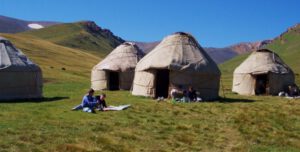
A defining symbol of Kyrgyz culture is the yurt, a portable round dwelling that represents harmony with nature. When you join one of our Kyrgyz Culture Tours you will have the chance to stay in authentic yurts, experiencing firsthand how nomads live in balance with the environment.
Hospitality of the Kyrgyz People
Hospitality is not just a tradition – it is a way of life. Locals welcome travelers as honored guests, offering tea, bread, and heartfelt stories. This deep sense of community is what makes Kyrgyz Culture Tours so memorable.
Authentic Kyrgyz Cuisine Experiences
Food plays a central role in understanding any culture. On your Kyrgyz Culture Tour, you will taste traditional dishes such as beshbarmak (boiled meat with noodles), kymyz (fermented mare’s milk), and manti (steamed dumplings). Ecotour ensures every meal is authentic and normally prepared by local families who are proud to share their culinary heritage.
Traditional Music, Dance, and Art
Music and art express the soul of the Kyrgyz people. From the haunting melodies of the komuz (a three-stringed lute) to the vibrant folk dances, each performance tells a story passed down through generations. Ecotour arranges cultural evenings where guests can enjoy these performances in an intimate setting.
Cultural Festivals and Celebrations in Kyrgyzstan
If you want to dive deep into the culture, plan your Kyrgyz Culture Tour during one of the country’s festivals such as:
- Nomad Games – a thrilling showcase of horseback competitions and nomadic skills.
- Nowruz Festival – a spring celebration filled with music, dance, and traditional foods.
- Yurt Festival – celebrating craftsmanship, traditional dress, and Kyrgyz unity.
Ecotour ensures you get exclusive access to such events along with local insights.
Handicrafts and Souvenirs: The Art of Felt and Wool
Kyrgyzstan is famous for its felt carpets (shyrdak), embroidered hats, and woolen goods. As part of our Kyrgyz Culture Tours, you will meet local artisans, observe their craft, and even try making your own felt souvenir. Supporting these artists helps preserve the cultural heritage and empowers local communities.
Historical Landmarks and Cultural Sites
Your Kyrgyz Culture Tour would not be complete without exploring:
- Burana Tower – a relic of the ancient Silk Road.
- Tash Rabat Caravanserai – a stone inn from the 15th century.
- Osh Bazaar – one of Central Asia’s most colourful and lively marketplaces.
Each site connects you to Kyrgyzstan’s deep historical roots and its role as a Silk Road crossroads.
Village Life and Homestay Experiences
To truly understand the country, live like a local. Ecotour offers homestay programmes where you can experience village life – help with daily chores, have a cooking lesson, or ride horses across stunning pastures. It is a cultural immersion unlike any other.
Sustainable Tourism and Eco-Friendly Travel
At Ecotour, sustainability is not a trend – it is one of our three over-riding principles. Our Kyrgyz Culture Tours promote responsible travel, ensuring minimal environmental impact whilst maximizing community benefit. We partner with local families, use eco-friendly lodges, and encourage guests to travel mindfully.
Kyrgyzstan’s Scenic Beauty Alongside Culture
Kyrgyzstan is often called the “Switzerland of Central Asia.” While exploring our culture, you will also witness majestic landscapes – from Lake Issyk-Kul to the Tian Shan Mountains. Nature and culture go hand in hand, creating an experience that nourishes both the soul and senses.
Customized Kyrgyz Culture Tour Packages
Every traveler is unique. That is why EcoTour.KG offers customised Kyrgyz Culture Tours to suit your specific interests, duration, and comfort level. Whether you are a solo traveler, a couple, or a group, we’ll craft the perfect itinerary for you.
Contact us to personalise your experience:
+996 557 802805
info@ecotour.kg
How to Book Your Kyrgyz Culture Tour with Ecotour
Booking your next adventure is simple:
- Visit ecotour.kg
- Choose your desired Kyrgyz Culture Tour
- Fill out the booking form or contact us directly via phone or email
- Receive a personalised confirmation and travel plan
Our team will take care of everything – from itinerary design to local guidance—so you can focus on experiencing the culture.
Conclusion
Our Kyrgyz Culture Tours are not just vacations – they are journeys into the heart of a nation proud of its traditions, landscapes, and people. From yurts to folk music, and from ancient towers to local cuisines, every moment connects you deeper to Kyrgyzstan’s soul. Join us and experience culture, nature, and hospitality in their purest forms.
“ Vrouw zijn in Kirgizië”. Zin en onzin over het vrouwenleven daar.
“ Vrouw zijn in Kirgizië”. Zin en onzin over het vrouwenleven daar.
Veel informatie op internet geeft de indruk dat het leven van vrouwen Kirgizië nog zeer archaïsch is. ‘Bruidenroof’ zou de manier zijn waarop mannen aan een echtgenote komen; als jonge vrouw zou je niet meer alleen over straat kunnen. Vrouwen zouden niet zonder hun man mogen reizen en in alles afhankelijk zijn van wat de man toestaat.
Zeker, bruidenroof- een overblijfsel uit de nomadentijd- komt nog voor, soms gearrangeerd door de beide a.s. partners, soms ook om economische reden. Het is echter officieel bij wet verboden. Er zijn net als in andere landen, ook hier mannen die hun vrouw terroriseren en mishandelen maar ook in Kirgizië vind je “Blijf van mijn Lijf” huizen.
Zoals uit het verhaal van Aisha- hieronder- blijkt, is er in Kirgizië wel een groot verschil tussen het leven op het platteland en in de stedelijke gebieden. Omdat er geen sociale voorzieningen zijn, ben je op je familie en buren aangewezen. Vrouwen en mannen hebben hun eigen sociale netwerk hebben waarin ze samen werken en elkaar steunen. Kirgizische vrouwen zijn over het algemeen sterke vrouwen die hun mannetje staan. Hoewel in de bergdorpen het leven nog steeds zwaarder is dan in de stedelijke gebieden, verandert dit steeds meer. Dit gaat snel nu men ook daar steeds meer gaat verlangen naar het comfort en gemak van hun zusters in de stad. Onderstaand verhaal illustreert dit.
Uit het leven van een schoondochter in een bergdorp in Kirgizië.
Fact and fiction about women’s life here.
Much information on the internet gives the impression that the life of women in Kyrgyzstan is still very archaic. ‚Bride kidnapping‘ is supposedly the way for men to get a wife and as a young woman you can no longer walk the streets alone. Women are supposedly not allowed to travel without their husbands and are dependent on what the man allows in everything.
True, bride kidnapping – a relic from the nomadic era – still occurs. Sometimes it is arranged by both partners, sometimes for economic reasons. However, it is officially prohibited by law. There are, just like in other countries, men here who terrorize and abuse their wives. But in Kyrgyzstan you can also find „Keep Your Hands Off My Body“ (safe) houses.
As Aisha’s story below shows, there is a big difference between life in the countryside and in the urban areas in Kyrgyzstan. Because there are almost no social services, you have to rely on your family and neighbours. Women and men have their own social network in which they work together and support each other. Kyrgyz women are generally strong women who hold their own. Although life in the mountain villages is harder than in the urban areas, this is changing more and more. This is happening more quickly now, and men and women are increasingly demanding the comfort and conveniences of a city-style life. The story below illustrates this.
From the life of a daughter-in-law in a mountain village in Kyrgyzstan.
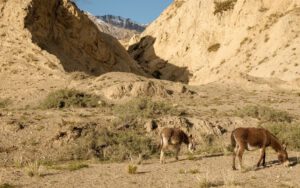
17/08/2024 Discover Enilchek with Ecotour, a cultural adventure!
Enilchek, also known as Inylchek, is a village located in the Sary-Jaz Valley in Kyrgyzstan. Once a vibrant village with 5,000 inhabitants, it is now a deserted ghost town in the mountains. The decline began after the collapse of the Soviet Union in 1991 leading to increasing unemployment and migration from the area.
Located near the Chinese border, Enylchek is a remote, and difficult to reach, place with plenty of mineral resources. Abandoned buildings and murals bear witness to a bygone era. Today only 30 families call Enilchek home and they are trying to breathe new life into the village, and attract tourists from all over the world. Although the village is deserted there is plenty to explore: meet the locals, wander the deserted streets and immerse yourself in the mystical atmosphere.
Just outside Enilchek are the Kara-Tash hot springs, perfect for a relaxing bath in pleasantly warm water.
To reach Enilchek you will need transportation by truck or jeep, and you will drive via the Ashuu Pass, one of the highest roads in Kyrgyzstan. Please note that accessibility can be limited in winter due to snow on the poorly maintained roads. In addition, Enilchek is located within the border zone with China, so obtaining the correct permit for your visit is essential. Contact us and Ecotour will be happy to organize this adventure for you – for more information see www.ecotour.kg or write to us at info@ecotour.kg
16/07/2024 Ontdek Enilchek met Ecotour, een cultureel avontuur !
Enilchek ook bekend als Inylchek, is een dorp gelegen in de Sary-Jaz-vallei in Kirgizië. Ooit een levendig dorp met 5000 inwoners, is het nu een verlaten spookstad in de bergen. De neergang begon na de ineenstorting van de Sovjet-Unie in 1991, wat leidde tot toenemende werkloosheid en migratie uit het gebied. Enilchek ligt vlakbij de Chinese grens en is daardoor een afgelegen en moeilijk bereikbare plek met tal van delfstoffen. Verlaten gebouwen en muurschilderingen getuigen van een voorbije tijd. Tegenwoordig noemen slechts 30 families Enilchek hun thuis en proberen ze het dorp nieuw leven in te blazen en toeristen van over de hele wereld aan te trekken. Hoewel het dorp verlaten is, is er genoeg te verkennen: ontmoet de bewoners, dwaal door de verlaten straten en dompel jezelf onder in de mystieke sfeer. Net buiten Enilchek liggen de Kara-Tash warmwaterbronnen, perfect voor een ontspannen bad in aangenaam warm water. Om Enilchek te bereiken, heb je vervoer met een truck of jeep nodig, je rijdt via de Ashuu-pas, een van de hoogste wegen van Kirgizië. Houd er rekening mee dat de toegankelijkheid in de winter beperkt kan zijn vanwege sneeuw op de onbeveiligde wegen. En omdat Enilchek zich binnen de grenszone met China bevindt, is het verkrijgen van de juiste vergunning voor je bezoek essentieel. Neem contact met ons op en Ecotour organiseert dit alles graag voor u. www.ecotour.kg

11/06/2024 Kyrgyzstan – table manners!
A Little Etiquette
Let’s have a quick light-hearted look at Nomadic Culture and a few of the mealtime dos and don’ts.
Not quite a meal, but if you visit someone’s house, however briefly, you will often be offered a plate with some bread or borsook (see previous post) on NAAN. It is good manners to take and eat a small amount. Obviously if there are borsook this is easy, just pick one up and eat it. But what if it a tandyr nann is presented, or a few slices of bread? Simply just break a small amount off and eat this. Nomadic custom says you should always feed your guests and this tradition of offering a small piece of bread to visitors passing through satisfies this custom.
However if you are there to eat a full meal then more knowledge is required.
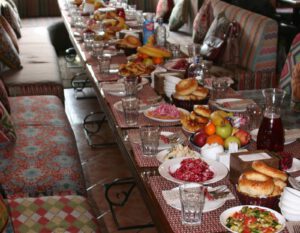
Firstly where around the table (?) should you sit? Just let the host guide you, they have already made the decision of who should sit where. The most honoured guests sit at the top of the table, and as your importance or status goes down so you sit further away from the top of the table. Often you will find the wife and children of the host family sitting at the lower end of the table.
Now to explain table (?). In yurts meals were often served on table-cloths laid on the floor with everybody sitting around the edges. Many yurts have low tables, but you will still be sitting on the floor. Feel free to wriggle around until you get comfortable. Before you panic at the thought of seizing-up sitting cross-legged on the floor, most yurts will also have small stools for those of us no longer as flexible as we used to be.
In many village homes you will find a similar situation. The only tall table will be in the kitchen and this is used for food preparation.
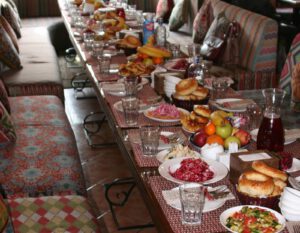
Sitting comfortably? More often than not the table will have plates of different salads, borsook and tandyr naan, jams, biscuits, fruits …. the options are endless. Where to start? The first thing you should eat is a borsook or a piece of tandyr naan. But take care. As you tear (do not cut) a piece of bread from the naan make sure you place it down the right way up. Naan, or any other bread, should never be placed upside-down.
Once you have found that you have over-eaten on bread and salad the hosts will bring out the main dish. Let’s have a quick look at the three main options.
Plov – probably the best known of all the Kyrgyz dishes. Carrots, onions and meat fried in a deep pan and then covered with rice that cooks slowly and absorbs all the juices and stock. Often garlic, chickpeas and raisins are added. Quite simply delicious. But do not take too much. With plov, and any other rice dish, you should not leave any grains of rice on your plate when you have finished eating. It is quite acceptable to ask for second and third helpings, and this will please the hostess immensely, but always finish the rice.
Beshbarmak translates as Five (besh) Fingers (barmak). This dish is made from boiling large joints of meat and, once cooked, the stock is used to boil noodles. The noodles are placed on a large dish, the meat, normally shredded, is placed on top and some of the stock is poured over. Frequently chopped-onions that have been slightly boiled in the stock are put on top. And why five fingers? In times gone by this dish was eaten without the use of cutlery, just with your fingers. If you wish to give it a try this way please make sure that you use your right hand.
Manti are stuffed dumplings that have been steamed. The fillings are various and are made from many things such as minced beef with onion or pumpkin with chive. Each household and restaurant has its own slight variation. Manti are frequently eaten by hand – it is easier. A note of caution. Manti can be quite juicy, so if you do eat them by hand beware. Just watch the locals, you will soon get the hang of it.
One final point of note. Kyrgyz cooking is not spicy hot. However most homes and restaurants will have some “laza”, a sauce made with chilli flakes, garlic, oil and maybe vinegar. Try a little at first, it can be very hot.
These are just a few Kyrgyz dishes. There are many more, some seasonal. Be adventurous, try them all. You will be pleasantly surprised.
Eet smakelijk, bon appétit, Guten Appetit, тамагыныз таттуу болсун (tamagynyz tattu bolsun).
12/06/2024 Iets over onze Etiquette
Laten we eens kijken naar en paar opvallende aspecten van de nomadische cultuur en naar een paar van de do’s en don’ts tijdens de maaltijd.
Het is niet echt een maaltijd, maar als je iemands huis bezoekt, hoe kort ook, krijg je vaak een bordje met wat Naan (brood) of borsok (zie vorige post in News) aangeboden. Het is beleefd om in ieder geval een kleine stukje te nemen en op te eten. Als er borsok is, is dit natuurlijk gemakkelijk, pak er gewoon een en eet dat op. Maar wat als er een tandyrnaan wordt gepresenteerd, of een paar sneetjes brood? Breek gewoon een klein stukje af en eet dit op. De Nomadische traditie zegt dat je je gasten altijd moet voeden en deze traditie om een klein stukje brood aan te bieden aan passerende bezoekers, brengt deze gewoonte in praktijk.
Als je echter een volledige maaltijd wilt eten, is er meer kennis vereist. Ten eerste, waar aan tafel (?) moet je zitten? Laat je gewoon leiden door de gastheer, die heeft al besloten wie waar moet zitten. De meest geëerde gasten zitten aan het hoofd van de tafel, en naarmate je belangrijkheid of status afneemt, ga je verder van het hoofdeind van de tafel vandaan zitten. Vaak vind je de vrouw en kinderen van het gastgezin aan het eind van de tafel zitten. Nu de uitleg over tafel (?). In yurts werden maaltijden vaak geserveerd op tafelkleden die op de grond lagen, waarbij iedereen aan de randen zat. Veel yurts hebben lage tafels, maar je zit nog steeds op de grond. Voel je vrij om rond te wiebelen tot je comfortabel zit. Voordat je in paniek raakt bij de gedachte om met gekruiste benen op de grond te zitten, de meeste yurts hebben ook kleine krukjes voor degenen onder ons die niet meer zo flexibel zijn als vroeger.
In veel dorpshuizen zul je een vergelijkbare situatie aantreffen. De enige hoge tafel staat in de keuken en deze wordt gebruikt om eten te bereiden. Comfortabel zitten? Meestal staan er borden met verschillende salades, borsok en tandyr naan, jam, koekjes, fruit … de opties zijn eindeloos. Waar te beginnen? Het eerste wat je moet eten is een borsok of een stuk tandyrnaan. Maar wees voorzichtig. Als je een stuk brood van de naan scheurt (niet snijdt), zorg er dan voor dat je het met de goede kant naar boven legt. Naan, of ander brood, mag nooit ondersteboven worden gelegd. Zodra je erachter komt dat je te veel brood en salade hebt gegeten, zal de gastheer het hoofdgerecht brengen. Laten we snel de drie belangrijkste opties bekijken.
Plov – waarschijnlijk het bekendste van alle Kirgizische gerechten. Wortels, uien en vlees gebakken in een diepe pan en vervolgens bedekt met rijst die langzaam kookt en alle sappen en bouillon opneemt. Gewoonweg heerlijk. Maar neem er niet te veel van. Bij plov, en elk ander rijstgerecht, mag je geen rijstkorrels op je bord laten liggen als je klaar bent met eten. Het is volkomen acceptabel om een tweede en derde portie te vragen, en dit zal de gastvrouw enorm plezieren, maar maak de rijst altijd op.
Beshbarmak vertaalt zich als Vijf (besh) Vingers (barmak). Dit gerecht wordt gemaakt door grote stukken vlees te koken en, als het eenmaal gekookt is, wordt de bouillon gebruikt om noedels te koken. De noedels worden op een grote schaal gelegd, het vlees, normaal gesproken klein gesneden, wordt erbovenop gelegd en een deel van de bouillon wordt eroverheen gegoten. Vaak worden er gehakte uien bovenop gelegd die licht gekookt zijn in de bouillon. En waarom vijf vingers? Vroeger werd dit gerecht gegeten zonder bestek, gewoon met je vingers. Als je het op deze manier wilt proberen, zorg er dan voor dat je je rechterhand gebruikt.
Manti zijn gevulde dumplings die gestoomd zijn. De vullingen zijn divers en worden gemaakt van veel dingen, zoals gehakt met ui of pompoen met bieslook. Elk huishouden en restaurant heeft zijn eigen kleine variatie. Manti worden vaak met de hand gegeten – het is gemakkelijker. Let op. Manti kunnen behoorlijk sappig zijn, dus wees voorzichtig als je ze met de hand eet. Kijk gewoon naar de lokale bevolking, je zult het snel onder de knie krijgen. Nog een laatste opmerking. Kirgizische gerechten zijn niet pittig heet. De meeste huizen en restaurants hebben echter wel wat „laza“, een saus gemaakt van chilivlokken, knoflook, olie en misschien azijn. Probeer het eerst een beetje, het kan erg heet zijn. Dit zijn slechts een paar Kirgizische gerechten. Er zijn er nog veel meer, sommige seizoensgebonden. Wees avontuurlijk, probeer ze allemaal. U zult aangenaam verrast zijn.
Eet smakelijk, bon appétit, Guten Appetit, тамагыныз таттуу болсун (tamagynyz tattu bolsun).
14/05/2024 De 6 beste soorten brood in Kirgizië – allemaal heerlijk!
NAN – brood voor het leven.
Brood is erg belangrijk voor de Kyrgyzen. Bij elke maaltijd wordt er wel brood in één of andere vorm gegeten. Als u met Ecotour reist, kunt u er zeker van zijn dat er heel vaak gelegenheid is om van onze NAN te proeven.
NAN is het Kirgizische woord voor brood in het algemeen. Er kan verwarring ontstaan omdat sommige broden ook ‘nan’ in hun nam hebben, en andere niet, maar wees gerust, ze smaken allemaal heerlijk.
BOORSOK, is de belangrijkste nan. Het zijn kleine vierkantjes brood, soms zout soms zoet, gebakken in olie en als er gasten zijn, op iedere tafel te vinden. En als we zeggen: op tafel te vinden, is dit meestal heel letterlijk. Ze liggen verspreid over het tafelkleed tussen de verschillende gerechten. Als er home-made boorsok op tafel ligt, dan is dit het eerste dat je moet eten. Vaak geserveerd met kaymak, een dikke, bijna zure room.

TANDYR NAN, is een groot plat brood gebakken in een Tandyr oven. Deze ronde platte broden hebben zachte, opstaande randen en een iets knapperiger midden. Tandyr naan is op elke straathoek te koop en hoort bij vrijwel elke maaltijd. Veel mensen gebruiken de Russische naam: lepyoshka.
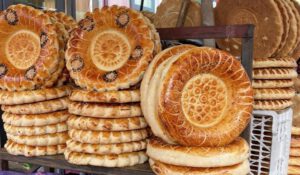
TOKOCH zijn veel kleinere ronde broden. Het is alsof iemand het platte, dunne midden uit een tandyr nan heeft gehaald en de randen dichter bij elkaar heeft geperst. Als je de dikke, opstaande randen van de tandyr naan erg lekker vindt, dan moet je zeker dit brood proberen.
KATTAMA Kattama’s worden gemaakt door het deeg dun uit te rollen en het oppervlak vervolgens met olie of sary mai (boter) in te smeren, het op te vouwen, weer uit te rollen en in te smeren. Hoe vaker je vouwt en rolt, hoe dunner de laagjes worden, totdat je bijna bladerdeeg hebt. De kattama wordt vervolgens gebakken in een koekenpan. Het is onnodig om te zeggen dat als je kattama eet, je vingers een beetje vettig .
KATYRAK NAN zijn tot knapperige broodjes gebakken deeg van ongeveer 7 à 8 centimeter hoog. Een stuk deeg wordt uitgerold en losjes opgerold. Dit wordt vervolgens gebakken en het krijgt de vorm van een groot en knapperig slakkenhuis. Katyrak naan wordt vaak gegeten op party’s en feestelijke gebeurtenissen en is verrassend lekker.
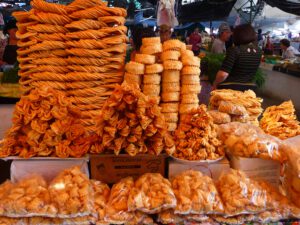
KALAMA zijn platte ongezuurde vierkantjes, die worden gerold en in schijven gesneden worden gebakken. Mogelijk zoiets als een Grieks pitabroodje. Kalama wordt opnieuw voornamelijk thuis gebakken
Gooi NOOIT brood weg. Het wordt werkelijk beschouwd als een vorm van heiligschennis. Eet wat je kunt en laat de rest op tafel liggen. Meel en brood zijn sinds mensenheugenis een hoofdbestanddeel van het voedsel in Kirgizië en dit moet altijd met respect worden behandeld. Iets minder erg is het wanneer je een brood ondersteboven neer legt, het is echter wel weer een teken van gebrek aan respect.
Wil je zelf één of meerdere soorten nan leren maken, laat het ons weten. www.ecotour.kg info@ecotour.kg
En mijn favoriet? Het brood dat nu voor mij op tafel ligt. GENIETEN!
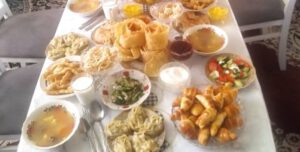
14/05/2024 The 6 best kinds of bread in Kyrgyzstan – all delicious!
NAN – bread for life.
The importance of bread in Kyrgyz life cannot be under-estimated. Bread is present, in one form or another, at every meal. When travelling with Ecotour, you can be sure you get many opportunities to taste our NAN.
NAN is the Kyrgyz word for bread, all bread. Confusion can set in as some of the breads have nan in their names, and some do not, but rest assured, all are delicious.
BOORSOK, the most important of all Kyrgyz nan. Boorsok are small squares of bread, sometimes salty and at other times sweet, that are fried and placed on every table when you have guests. And when we say placed on the table this is, more often than not, quite literally true. They will be spread across the tablecloth in between the various dishes. If you sit down for a meal and there are borsook on the table, this is the first thing you should eat. Often boorsook are served with kaymak, a thick, almost sour, cream. Boorsok are usually home-cooked.

TANDYR NAN, a largish flatbread cooked in a tandyr oven. These circular flatbreads have soft puffy edges and a slightly crisper centre. Tandyr nan is for sale on every street corner, and is a part of almost every meal. If somebody tells you to go out and buy a nan, this is what they mean. Many people also use the Russian name – lepyoshka.
TOKOCH are much smaller round breads. It is rather like someone has taken the flat, thin middle out from a tandyr nan and squeezed the edges closer together. If you prefer the thick, puffy edges of the tandyr nan, then this is the bread for you.
KATTAMA are often made with some onion sprinkled in the pastry mixture. Kattama are made by rolling out the pastry, then painting the flat surface with oil or sary mai (ghee), folding it over and then repeating the process numerous times. The more often you fold and roll the thinner the layers become until you almost have puff-pastry. The kattama is then cooked in a frying-pan. Needless to say, when you eat kattama your fingers end up a little bit greasy.
KATYRAK NAN are crispy rolls of fried pastry, about 7 or 8 centimetres high. A length of pastry is rolled out and loosely rolled up. This is then fried and you end up with almost a big and crispy snail’s shell. More often used when entertaining, katyrak nan are surprisingly moreish.
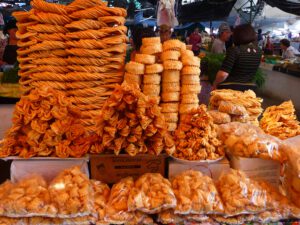
KALAMA are quite simply pastry rolled into discs and dry-fried. Possibly something like Greek pitta bread. Kalama are again mainly home cooked.
NEVER throw away any nan. It is truly regarded as a form of sacrilege. Eat what you can and leave the rest on the table. Flour and bread have been a staple of the Kyrgyz since time immemorial, and should always be treated with respect. Not quite so bad, but never place a nan upside down, it is another sign of disrespect.
Do you want to learn yourself how to make one or more kinds of nan, just let us know. www.ecotour.kg info@ecotour.kg
And my favourite? The one on the table in-front of me. ENJOY!

Is it possible for a woman to travel alone in Kyrgyzstan?
Is it safe for a woman to travel alone in Kyrgyzstan?

If you delve a little into the culture and customs of the country then this should not be a problem. Public drunkenness and walking around topless will cause problems in many countries, including in Kyrgyzstan. To know what is and what is not possible, here is some background information.
Life, customs and habits of women in Kyrgyzstan
Living in the city. There is a big difference between city and countryside. Especially in cities like Bishkek and Karakol, life, especially at first glance, is very similar to what we are used to in the West. Women dress modernly, often have a job and children go to daycare at an early age. All younger people have a mobile phone, are on Facebook, TikTok and Instagram, and this obviously influences their views and lifestyle. Here you can travel quietly alone by public transport, go shopping, have a drink on a terrace or visit a concert or museum. However, it is not advisable to walk after dark in remote parts of the city that often do not have streetlights. In such cases it is better to take a taxi. There are several on-line taxi apps that work efficiently. Petty crime certainly does occur. You should be suspicious of pickpockets, especially on busy streets, in crowded buses and in the bazaars. Wear your backpack or bag on your stomach and not on your back, and do not carry expensive equipment, cameras and laptops in plain view.
In the countryside it is different. Here the woman is the one who takes care of the house, children and animals. In the house the woman is the boss. A man’s world is outside the home and a women’s world is inside the house. Most men do not easily get involved in women’s affairs and vice versa. As a woman travelling alone it is best to contact women. They will certainly help you if necessary, or tell a man to help you.
Hospitality is characteristic of Kyrgyz society. When you are a guest, or stay with someone, he/she feels responsible for you. This dates back to the time when the Kyrgyz were full-time nomads. Back then people were dependent on each other and had to be able to count on the help of other wandering nomads. Thus hospitality was a form of mutual aid. You will still find this hospitable attitude in the countryside. Unfortunately there are also tourists who abuse this and expect to be able to spend the night for free.
The family is of extreme importance to the Kyrgyz. Due to the lack of social services, people have to rely on the family for help, and also for financial support. Uncles and aunts, siblings and cousins are also expected to assist in emergencies and contribute financially to weddings and funerals.
Elderly people are treated with respect. A young person will not easily contradict someone older, even if he/she disagrees. Saying ‘no’ straight out is considered to be rude. This makes it difficult for a Kyrgyz to refuse something to an elderly person or guest. In such circumstances there will be either no response or an evasive answer.
If you delve into the local way of life, customs and habits, and bear them in mind, Kyrgyzstan is a wonderful holiday destination for a woman travelling alone. Ecotour is happy to organise an unforgettable tour for you.
Email or WhatsApp us: info@ecotour.kg or +996 557 802 805.

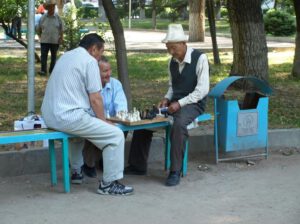
05/05/2024 Op reis in Kirgizië als vrouw alleen, kan dat wel… ?
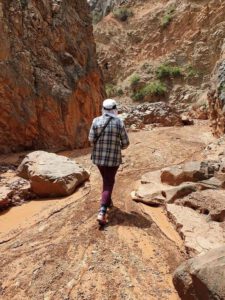
Konorchok
Kirgizië is een schitterend bergland, je wilt er heel graag een rondreis maken, maar kan dat wel als vrouw alleen? Als je je een beetje verdiept in de cultuur en gebruiken, hoeft dat geen probleem te zijn. Openbare dronkenschap en topless rondlopen, zal in veel landen aanleiding tot problemen geven, zo ook in Kirgizië. Om te weten wat wel en niet kan, volgt hier wat meer achtergrondinformatie.
Het leven, gewoontes en gebruiken van vrouwen in Kirgizië
Leven in de stad. Er is een groot verschil tussen stad en platteland. Vooral in steden als Bishkek en Karakol lijkt het leven, zeker op het eerste gezicht, erg op dat wat we gewend zijn in het Westen. Vrouwen gaan modern gekleed, hebben vaak een baan en kinderen gaan al jong naar een kinderdagverblijf. Alle jongere mensen hebben een mobieltje, zitten op Facebook, Tiktok en Instagram, wat uiteraard invloed heeft op hun opvattingen en levenswijze. Je kunt hier rustig alleen met het openbaar vervoer reizen, winkelen, een glas drinken op een terras of een concert of museum bezoeken. Het is echter niet raadzaam om als het donker is, te voet naar afgelegen gedeeltes van de stad te gaan, die vaak ook geen straatverlichting hebben. In zo’n geval kan je beter een taxi nemen. Kleine criminaliteit komt zeker voor. Vooral in drukke straten en op de bazaar dien je verdacht te zijn op zakkenrollers. Draag je rugzak of tas voor op je buik en niet op je rug, loop niet met dure apparaten, camera’s en laptops te koop.
Op het platteland is het anders. Hier is de vrouw degene die voor huis, kinderen en dieren zorgt; in huis is de vrouw de baas. Er is sprake van een mannenwereld buitenshuis en een vrouwenwereld binnenshuis. Een man zal zich niet snel met vrouwenzaken bemoeien en andersom ook niet. Ook als men getrouwd is blijft dit onderscheid bestaan. Als alleenreizende vrouw kan je dus het beste contact zoeken met vrouwen, ze zullen je indien nodig zeker helpen of een man vragen je te helpen.
Gastvrijheid is kenmerkend voor de Kirgizische samenleving. Als je bij iemand te gast bent of logeert voelt hij/zij zich verantwoordelijk voor je. Dit stamt nog uit de tijd dat de Kirgiezen fulltime nomaden waren. Toen was men afhankelijk van elkaar en moest men op de hulp van andere rondtrekkende nomaden kunnen rekenen. Dit was dus wederzijdse hulp. Deze gastvrije attitude zul je op het platteland nog steeds aantreffen. Helaas zijn er ook toeristen die hier misbruik van maken en verwachten zo gratis te kunnen overnachten.
De familie is voor een Kirgies van uitermate groot belang. Door het ontbreken van sociale voorzieningen is men op de familie aangewezen voor hulp maar ook voor financiële steun. Ook ooms en tantes, neven en nichten worden geacht bij te springen in noodgevallen en financieel bij te dragen bij bruiloften en begrafenissen.
Ouderen behoren met respect behandeld te worden. Een jongere zal niet snel iemand die ouder is tegenspreken, ook al is hij/zij het er niet mee eens. Direct ‘nee’ zeggen wordt als iets onbeleefds gezien. Dit maakt het voor een Kirgies lastig om een oudere of gast iets te weigeren. Over het algemeen zal er dan dus of niet gereageerd of een ontwijkend antwoord gegeven worden.
Wanneer je je wat verdiept in de levenswijze, gewoontes en gebruiken en daar rekening mee houdt, is Kirgizië ook voor een alleenreizende vrouw een schitterende vakantiebestemming. Ecotour organiseert graag een onvergetelijke rondreis voor je.
Mail of App ons. Email: info@ecotour.kg of App: 00996 557 802 805

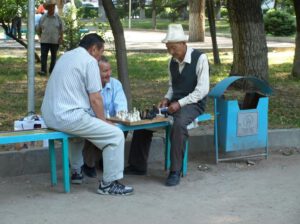
Lake Issyk-Kul. Be careful who you upset
Lake Issyk-Kul. Be careful who you upset.
In the northeast of our country, surrounded by snow-capped mountains, lies Lake Issyk-Kul, the second largest mountain lake in the world. At some point, on almost all our tours, you will come to this beautiful lake with clear blue water.
There are several legends about its origins, and this is one of our favourites. It is about the young woman who sacrificed her life for her loved one.
How it started
It is said that in ancient times there was a city that belonged to an old and powerful Kahn. He heard about this young woman who was said to be beautiful, but poor. He decided he wanted her. However the girl loved someone else. Her loved one had to travel far away, but before he left he gave his ring to her. He told her never to take off this ring for as long as she wore the ring nothing could happen to her; and he left and promised to return soon.
The Kahn makes his move
As soon as he had gone the Kahn’s deputies arrived laden with gifts, but the young woman refused to go and said she loved another man. She left for the mountains and hoped to find her lover there. Suddenly she noticed that the ring was missing, she cried and decided to return home. Unfortunately along the way she was ambushed by the Khan’s armed horsemen who took her to his castle.
The Kahn showered her with gifts and expensive jewelry, but still she refused his advances. Ultimately the Khan decided to make her his bride by force. When he walked up to the young woman to grab her, she ran to the open window and leapt out with a loud scream.
Never upset a lady
At that moment the walls shook and the granite arches of the castle collapsed. Torrential water flowed from all the gorges, it rose higher and higher, the Kahn’s castle disappeared and the valley filled with water. And so Lake Issyk-Kul was create
21/04/2024 Issyk-Kul meer. Wees voorzichtig in relaties
Ons schitterend Issyk-Kul meer
10/04/2024 Festival Visits – A Great Addition To Your Holiday
Make your holiday in Kyrgyzstan extra special with a visit to a festival. Festivals happen on various dates in July and August. The festivals, which are all local, will give you a chance to get to know some of the life-style and traditions of the nomads.
During the festivals you will see traditions that have been revived and which test the skills and agility of the nomads on horseback or flying their eagles in competitions and games.
Music, dancing and the tasting of all kinds of nomadic dishes will take place. Festivals are a great way to sample nomadic traditions.
Festival visits can always be included in your holiday trip. Please contact us for dates and further information. www.ecotour.kg
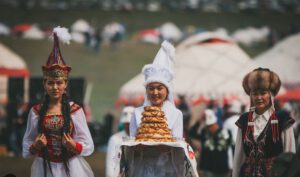
08/04/2024 Maak u vakantiereis zeer bijzonder en bezoek een festival in Kirgizië.
Op verschillende data In juli en augustus maakt u kennis met het leven van de gebruiken van de Kirgizische nomaden.
Tijdens deze festivals herleven tradities uit het verleden: wie is het behendigst te paard, welke adelaar is het beste afgericht; competities en wedstrijden met een zeer oude geschiedenis. Muziek, dans en het proeven van allerlei nomadische gerechten zijn eveneens onderdeel van het festival. Een bezoek aan een festival kunnen we altijd in uw vakantiereis opnemen. Neem contact met ons op voor data en verdere informatie. www.ecotour.kg
19/03/2024 26 years of travelling with Ecotour
Just over 26 years ago, two young Kyrgyz sisters decided that tourism, then still unknown, could play a large part in the future of our country. But tourism should not have a negative effect on the country, the environment and the people.
So on the 19th March 1998 Ecotour was registered as a legal entity. Not only was it one of the first companies, but also it was and still is, owned and managed by two Kyrgyz women – a somewhat unique event.
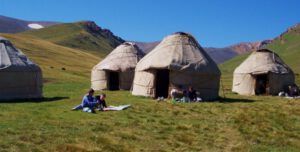
The yurt camp and the homestay concepts were both introduced by Ecotour. The principal of working with locals and helping rural communities was, and still is, a critical part of our culture. We now organize, horse-riding, trekking tours, cycling tours and cultural tours. Also, family tours, even with young children. Our staff are all Kyrgyz (with 2 notable exceptions), and our guides and drivers work in the areas where they grew up and know.
We had a party to celebrate our birthday and now, as we enter our 27th year of operation, we look forward greeting you in our homeland. Over the years we have made many friends, and even today many of our first guests still keep in touch, sometimes revisiting and sometimes coming to see us at the travel fairs.
Make this year the year you visit one of the most beautiful countries, and meet some of the most generous and wonderful people. Hope to see you soon.
19/03/2024 Al 26 jaar met Ecotour-Kyrgyzstan op reis
14/03/2024 Merzbacher meer
Onze nieuwe Trekking in Kirgizië is de tocht naar de Engylchek gletsjer en het Merzbacher meer.
Dit meer vult zich in het voorjaar met smeltwater en in juli/augustus is het opeens leeg.
Ben je een goede bergwandelaar en wil je dit natuurfenomeen ook zelf aanschouwen, ga met on mee op avontuur en boek deze reis met ons. info@ecotour.kg en www.ecotour.kg

13/03/2024 Lake Merzbacher
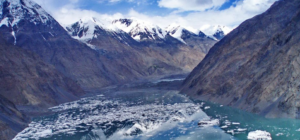
New this season, a trek to Lake Merzbacher, nestled between the North and South Engilchek glaciers.
In springtime this lake fills with water from the melting snows and in August it suddenly empties over 2 or 3 days.
If you are a fit and healthy mountain hiker and would like to see this wonder then join our adventure and book this trip – info@ecotour.kg or our website www.ecotour.kg
09/03/2024 New trekking tour for 2024 – mysterious Lake of Merzbacher
Announcing an exciting new tour for 2024.
Nestled between almost 7,000 metre peaks there is a lake that mysteriously disappears every year. An amazing trek to an amazing place.
For more details contact info@ecotour.kg